HOW TO START TRAIL RUNNING
How to start trail running: Tips and Tricks for beginners
Getting some cardio in doesn’t mean you need to slog along the pavements every evening after work. For those who want a little more atmosphere while they get their heart rate up, trail running can be a fantastic way to stay fit, while enjoying some meditation on the move. Find your nearest trails, throw on a pair of HOKA trail running shoes and ready to kick up some dust. If you’re just starting out in your trail running journey, we’ve made a list of the few of the things you need to consider before you head off to the unbeaten tracks.
Pick the right trails
Finding the right trail for your first outing will go a long way towards ensuring that you go back for more. Your chosen track has got to be relatively easy-going, try to find trails with even ground, very little elevation and clearly marked directions. Start closer to home with city-based trails or organised events that offer the security of marked paths and fellow runners. Remember, it’s about having fun out there, not getting lost in the wilderness. Despite the extra foam, this shoe doesn’t feel bulky. In fact, it’s lighter than its predecessor at a featherweight of 9.8 oz for men and 8.0 oz for women. More cushioning, less weight, and everything you need to smash your next PB.
Get the right gear
Newcomers to the trails often think they need to break the bank and buy the best gear before their foot has even touched the ground. The truth is that simpler, sturdy road running shoes and a good pair of running shorts will do just fine on the more basic trails. Over time, as the difficulty level of your trails increases, a good pair of grippy trail specific running shoes will be necessary, but not just yet. Hold off on spending cash on compression socks, hydration packs, or GPS watches until you're sure trail running is for you. As you start running over longer, more difficult routes, a lightweight hydration pack, running jackets, wet weather clothing and safety gear will join your trail running backpack. Once you get past those first few sessions, look at some of the HOKA range for styles like HOKA Mafate. These shoes provide aggressive traction with true cushioning and ultralight materials.

Train Smart, Keep It Fun
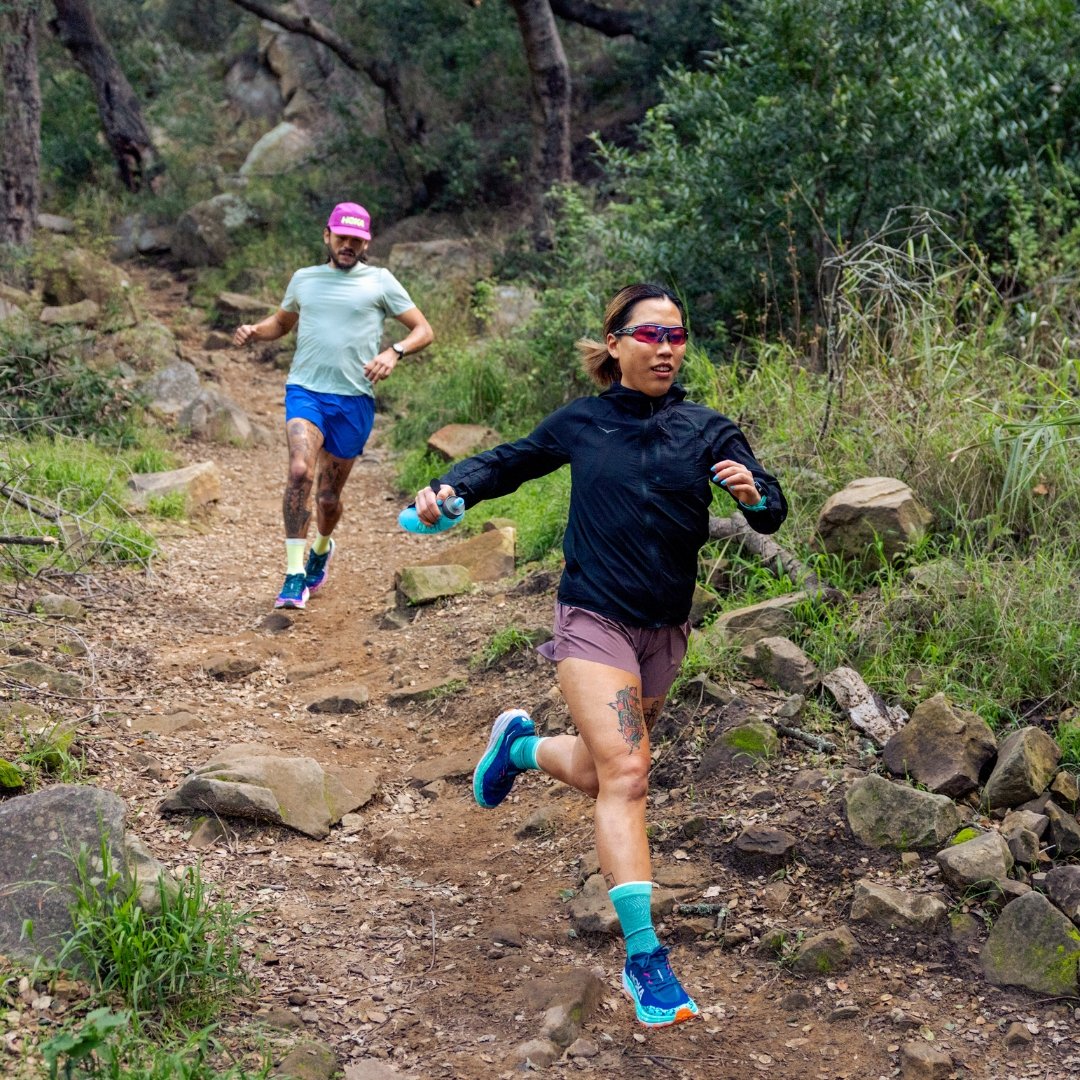
It may be tempting to chase those Bear Grylls like straight out of the gate, but slow and steady wins the trail running race. Trail running isn't just road running's cousin, it’s an entirely different venture, requiring good level of concentration and balance to adapt to rugged terrains, uneven ground, and tough gradients. Build your trail fitness gradually over weeks and months. Take on shorter, technical runs before tackling longer distances. Early in the game it’s all about building confidence, avoiding injuries and gradually building your fitness levels.
Don’t be a clock-watcher
Your road-running personal best means nothing on the dusty trails, leave them behind where they belong – on the roads. Unlike the pavements, trail running courses vary a lot when it comes to difficulty and terrain, making comparing them to your road running times irrelevant. A 20 minute scramble through rocks, mud, and hills can feel like you’ve been running for hours compared to 5 kilometres on the roads. On the trails have it in the back of your mind that success is measured in the feeling that you’ll have afterward. Learn to love the unpredictability, and you’ll learn that trail running is less about PBs and more about clearing the mind and getting a good sweat going along the way.
Learn to love the elements
You’ll quickly realise that trail running brings with it wet shoes, muddy legs, and a little bit of walking. Forget gently navigating big puddles or stressing about dirty socks, learn to embrace dirty trips home in the car with a towel on the seat. Wet feet dry, stains come out in the wash, and nothing feels more feeing than splashing straight through those puddles. Save some energy by walking up hills if you need to, there’s no shame in it, and revel in the fact that even seasoned pros do it. And those insects and critters you're worried about? They’re probably more scared of you loudly stepping through their territory than you are of them.
Train for the trails
To truly learn to love trail running, you'll need more than just a good level of cardio. Trail running requires a good level of agility, balance, strength, and a bit of dance-like coordination. Add some basic strength exercises to your weekly training with things like lunges, squats, and some core-strength work. Trails will surprise you with uneven ground, hidden roots, and rocky descents, so building up your proprioception (your body's ability to sense its position) is key. You will gradually learn to keep one eye on the ground and one eye ahead, as strange as that sounds. If you've ever found yourself bored mid-run along suburban streets, it might be time to swap the concrete for the dirt tracks. The best part is, you’re already in the right place when it comes to all of the gear that you’ll need to tick off your first few sessions on the trails.